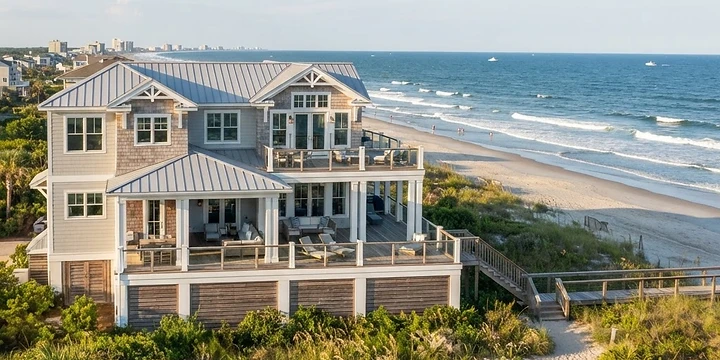
Buying a Waterfront Home on the Grand Strand: What to Inspect
Investing in a waterfront property along the Grand Strand offers an unparalleled lifestyle, but the environmental complexities of coastal living demand a rigorous due diligence process. This guide outlines the essential inspection points—from structural seawall integrity to navigating complex flood insurance requirements—to ensure your Myrtle Beach investment remains secure for the long term.
Understanding Local Flood Zones and Elevation Certificates
Before finalizing any purchase in neighborhoods like Ocean Drive or Surfside Beach, you must understand your property’s flood risk. The Federal Emergency Management Agency (FEMA) classifies coastal areas into distinct zones, and these classifications dictate both your insurance premiums and building requirements.
The Importance of the Elevation Certificate
An Elevation Certificate (EC) is a critical document that benchmarks your home’s elevation relative to the base flood elevation. If you are considering a property in a low-lying area, ensure the EC is up to date. In recent seasons, insurance carriers have shifted toward risk-based pricing, making this document essential for obtaining accurate home value estimates.
Seawall and Bulkhead Integrity
For properties fronting the Intracoastal Waterway or private inlets, the seawall is often your home’s primary line of defense. A failing seawall is not just a cosmetic issue; it is a structural threat to your land. During your inspection, look for:
- Signs of erosion or soil sinkholes behind the wall.
- Cracks, tilting, or visible gaps in the bulkhead material.
- Rusting tie-backs or metal reinforcement corrosion.
If the wall shows signs of fatigue, you must factor in the substantial cost of replacement or stabilization into your offer. Always hire a marine contractor, not just a standard home inspector, to evaluate the structural integrity of these coastal components.
Navigating Dock Rights and Riparian Ownership
One of the most attractive features of waterfront living in areas like Grande Dunes is private water access. However, dock rights are governed by state and federal regulations, and they do not always convey automatically with a property deed.
Before closing, confirm whether the dock is permitted by the U.S. Army Corps of Engineers and the South Carolina Department of Health and Environmental Control (DHEC). You should compare the difference between a deeded dock right and a revocable permit:
| Feature | Deeded Dock Right | Revocable Permit |
| :--- | :--- | :--- |
| Longevity | Permanent/Transfers with Title | Subject to Renewal |
| Control | Higher Property Owner Control | Subject to Agency Regulation |
| Risk | Lower Legal Uncertainty | Potential for Restriction |
Coastal Insurance: Managing Premiums and Coverage
Insurance on the Grand Strand is a complex ecosystem. Beyond standard homeowners coverage, waterfront owners often face a combination of flood, wind, and hail policies. In many instances, the proximity to the Atlantic Ocean significantly influences your "wind-hail" deductible. Consult with a specialist who understands the nuances of the Myrtle Beach market to ensure you aren't over-insuring or under-insuring your asset.
Frequently Asked Questions
What is the most common issue found during coastal home inspections?
Water intrusion and moisture-related damage are the most prevalent findings. Given the high humidity of the Grand Strand, proper ventilation and building envelope seals are non-negotiable for property longevity.
Do all waterfront homes require flood insurance?
Not necessarily, though it is strongly recommended for almost any property in the coastal region. Even if your mortgage lender does not mandate it, the peace of mind offered by a flood policy is vital in a coastal environment.
How can I verify my property's dock permits?
Contact the local DHEC office or request the existing permit records from the current seller. If no permits exist for a structure currently in the water, you may face future legal or removal liabilities.
Conclusion
Investing in a waterfront property requires looking past the panoramic views to examine the foundational elements of the home and the shoreline itself. By prioritizing seawall health, understanding your specific flood zone, and verifying your dock rights, you protect your capital and ensure a smoother ownership experience.
Ready to find your slice of the Grand Strand? Browse our curated waterfront listings or contact our team to speak with a specialist familiar with the nuances of coastal real estate.