investment · Myrtle Beach · August 10, 2026
Investing in Myrtle Beach Short-Term Rentals: A Numbers Guide
Navigate the Myrtle Beach short-term rental market with this data-informed guide on cap rates, regulations, and cash-flow strategies.

investment · Myrtle Beach · August 10, 2026
Navigate the Myrtle Beach short-term rental market with this data-informed guide on cap rates, regulations, and cash-flow strategies.
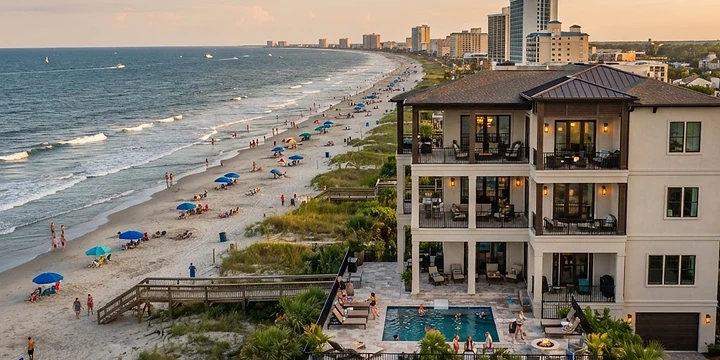
The Myrtle Beach Grand Strand remains one of the most resilient vacation rental markets in the Southeast, offering a unique blend of high-volume seasonal demand and year-round lifestyle appeal. This guide breaks down the financial fundamentals, regulatory landscape, and neighborhood performance metrics you need to build a profitable portfolio.
When evaluating a property in the Grand Strand market, investors often prioritize the capitalization rate (cap rate) as the primary indicator of performance. In Myrtle Beach, cap rates are typically influenced by proximity to the Atlantic Ocean. Oceanfront properties generally command the highest nightly rates but often carry higher HOA fees and maintenance costs compared to second-row or inland units.
Different segments of the Grand Strand offer distinct investment profiles. For example, neighborhoods like Grande Dunes attract a luxury-tier renter seeking upscale amenities and golf access. Conversely, Ocean Drive in North Myrtle Beach maintains a strong multi-generational appeal, often leading to longer average stays.
| Property Type | Rental Strategy | Typical Guest Profile | | :--- | :--- | :--- | | Oceanfront Condo | Short-Term Rental | Weekend/Weekly Vacationers | | Single Family Home | Mid-Term/Long-Term | Traveling Professionals/Families | | Market Common Unit | Hybrid Rental | Year-round Local/Seasonal |
Short-term rental laws in Myrtle Beach are generally stable but can be subject to localized zoning shifts. Investors should always verify the specific rules for their target sub-market, particularly in Surfside Beach or within unincorporated Horry County, where noise ordinances and parking restrictions are strictly enforced. Always confirm that the property is located in an area zoned for transient occupancy before signing a contract.
To drive consistent returns, seasoned investors focus on three core pillars: dynamic pricing, professional-grade photography, and guest experience. In a competitive market like Myrtle Beach, your listings must stand out. Properties that offer keyless entry, high-speed Wi-Fi, and updated coastal aesthetics typically see higher booking conversion rates regardless of the season.
Myrtle Beach experiences a peak season from May through August. While fall and winter rates are lower, the area has seen a rise in 'snowbird' travelers, which can help offset vacancies during the shoulder months.
While self-management saves on fees, professional managers typically possess the local market intelligence and cleaning logistics needed to maintain high guest ratings, which are crucial for repeat bookings.
To understand your potential return on investment, you should start with a home value estimate that considers historical rental data for similar units in the immediate neighborhood.
Investing in Myrtle Beach requires a disciplined look at the numbers and an understanding of the specific sub-markets along the Grand Strand. By focusing on smart property selection and efficient management, investors can build sustainable cash flow in this perennial vacation destination. Start your search today by browsing our latest Grand Strand listings to find your next opportunity.
Weekly market updates straight to your inbox. Create a free account to subscribe.
Create a free account to subscribe.
Market briefs are delivered to registered members. Sign up with your email to receive weekly coastal updates.


